
London Underground Advertising Guide
The Tube sells attention rather than impressions. How the formats work, what the dwell times actually are, and how to choose the right lines and stations for your audience.
average dwell time in a Tube carriage
Total Recall / TfLdwell in the Kings Cross interchange corridor
Media owner data, 2026ABC1 audience on the Bank travellator
Media owner data, 2026fortnightly footfall, Kings Cross corridor
Media owner data, 2026Why does the Underground work differently from other out-of-home?
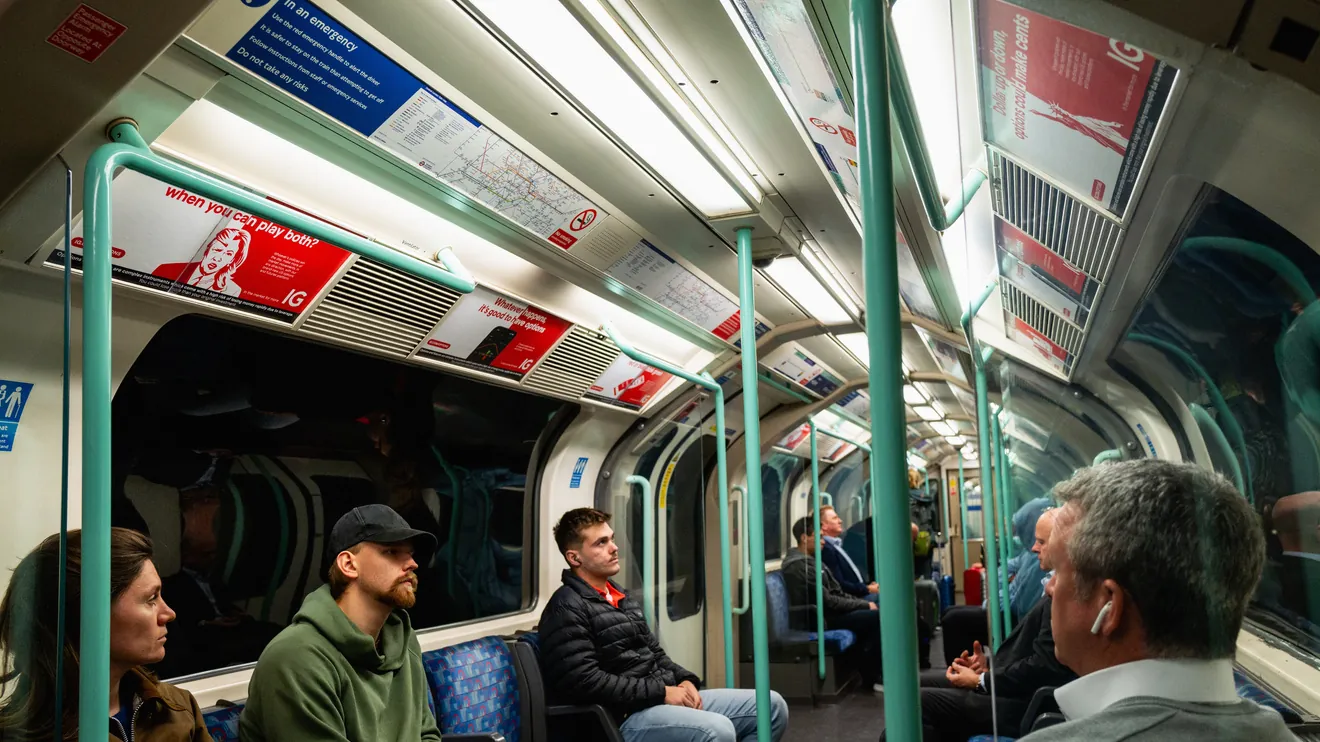
Because the audience is seated or standing, underground and often out of signal, with a 13 minute average dwell time in carriage.
Most out-of-home is measured in seconds as someone passes. The Tube is measured in minutes. TfL handles up to 5 million passenger journeys a day, and on TfL and Total Recall's data, high dwell environments like these are reported to be markedly more effective at building awareness.
That changes what the creative has to do. Longer copy works. Detail works. A message that would fail on a roadside 48-sheet can carry a full proposition here.
What formats can you buy?
Four families, and they behave very differently.
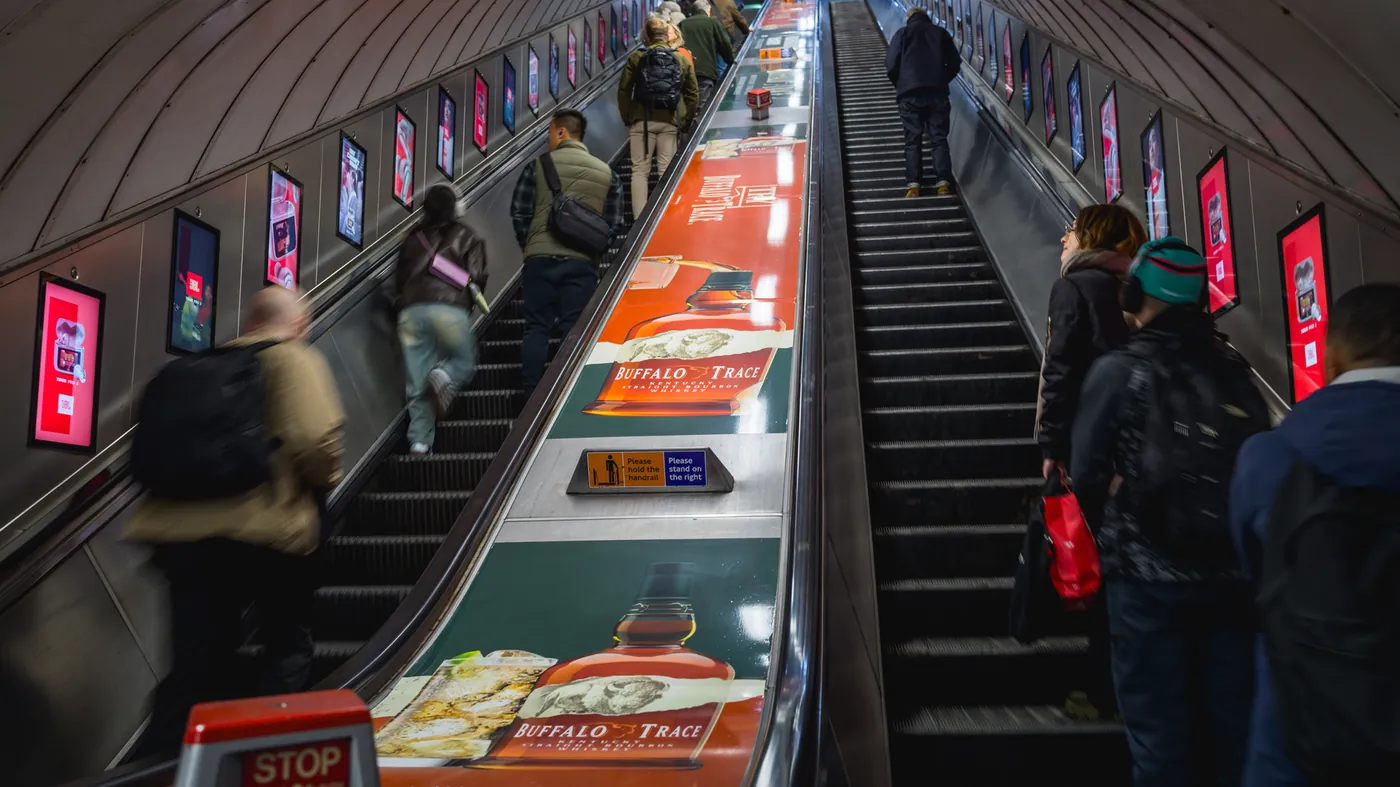
- In carriage. Tube car panels and tube cards, by the carriage, the line or the network. The dwell-time play.
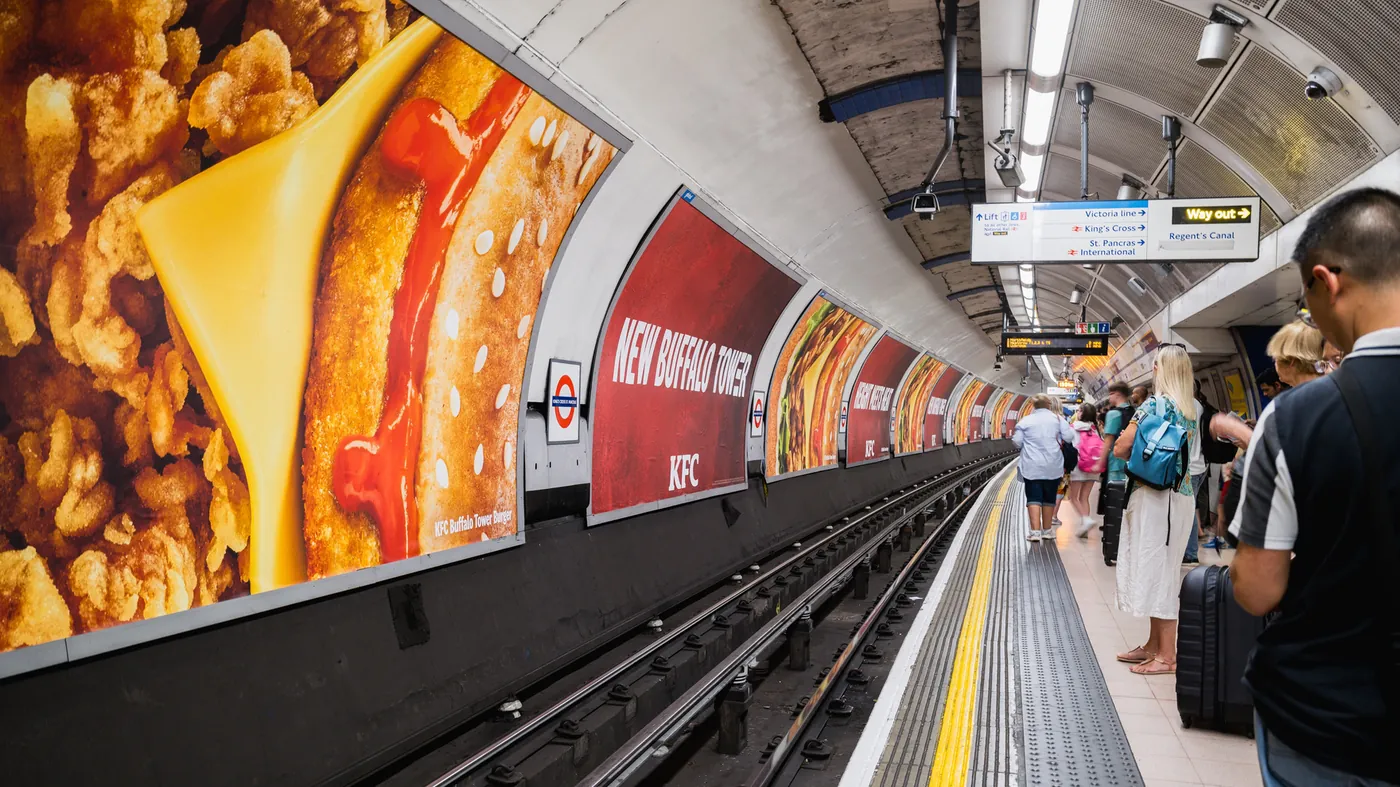
- Station environment. Platform 48-sheets and 12-sheets, escalator panels including digital escalator panels, gateline and ticket hall screens.
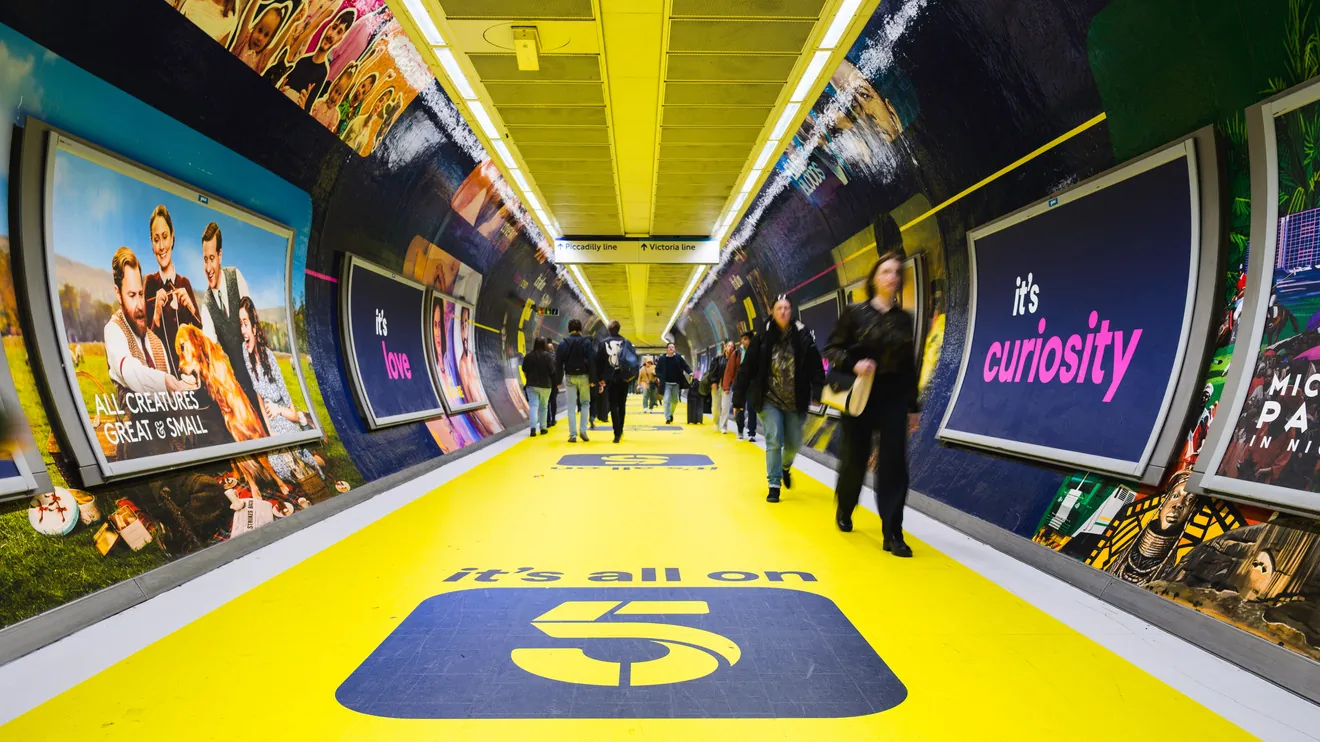
- Dominations. A whole corridor, a travellator, a ticket hall or a full cross-track platform taken over as one canvas.
- Train exteriors. Full exterior wraps that carry the brand across the network.
They can be planned at any station on the network, on their own or together, for a week or a season.
What is a station domination, in practice?
One station, one brand, every surface a commuter passes on the way through it.
At Kings Cross, the interchange corridor to the Northern line ticket hall offers 90 seconds of dwell and carries fortnightly footfall of 2,657,341. It can be bought as a wall wrap, with a full-length floor graphic and an exit arch as upweights.
At Bank, the travellator is an 80 metre enclosed tunnel running sixteen 48-sheet panels, or a 180 degree vinyl wrap. It delivers at least 60 seconds of dwell to a 93% ABC1 audience, over half of them AB, with 51% on a personal income of £50,000 or above.
Angel, Liverpool Street, Old Street and Shoreditch High Street each have their own domination packages, and any other station can be planned around your audience. The station is the targeting.
How do you choose where a Tube campaign runs?
Audience first, then format, station, duration and production.
We start with who you need to reach. A City financial audience points to Bank. A broad commuter audience points to Kings Cross or carriages across several lines. A creative or tech audience points to Old Street and Shoreditch. A London-wide launch can use all of them.
Production is built in from day one: large corridor wraps need specialist print and installation, and a train wrap needs at least 14 weeks from final approved artwork.
What can't you advertise on the Underground?
Food and non-alcoholic drink high in fat, salt or sugar, among other restrictions in TfL's advertising policy.
Since 25 February 2019 TfL has restricted HFSS food and drink advertising across its estate, including the Underground, Overground, buses and bus shelters. Compliant products can still be advertised, and we check copy against the policy before anything is booked.
We plan around the audience you are buying rather than the stations with the biggest numbers attached, and every line on the plan comes with a rationale.
Frequently asked questions
What is the average dwell time on the London Underground?
What formats are available on the Tube?
Can you advertise at any Tube station?
Can you wrap a whole Tube train?
Who is the audience on the Bank travellator?
Where these figures come from
- London Underground media owner availability data, 2026: formats, footfall, dwell times and audience profile
- Total Recall and Transport for London: 13 minute average in-carriage dwell time
- Transport for London, London Underground: up to 5 million passenger journeys per day tfl.gov.uk
- Lewis Silkin, TfL announces ban on HFSS advertising (scope of the TfL estate, from 25 February 2019) adlaw.lewissilkin.com
Keep reading
Here's how we can run it for you.